
Here's the Gist
As a certified Spin instructor with 20 years of experience, I am here to break down the confusing world of indoor cycling pedals and shoes. Choosing the right cleat setup will boost your power, protect your knees, and completely transform your indoor ride.
- Clipless pedals allow full 360-degree pedal strokes, protect your knees with built-in float, and can increase your power by over 16%.
- Most cycling shoes last an average of 7,000 miles before replacement, far outlasting standard running shoes that only last 300 to 500 miles.
- SPD systems utilize a two-bolt cleat common in commercial studios, whereas LOOK Delta and SPD-SL use wider three-bolt systems offering slightly more stability.
- Toe cages allow regular gym shoes, but they sacrifice power transfer, slip easily, and let feet move enough to risk knee injuries.
- You can easily swap the pedals on any spin bike to match your preferred shoe style, including Peloton bikes which use LOOK Delta.
- To click in, drive your heel down once aligned; to unclip, bring pedals parallel to the ground and push your heel outward.
Curious about indoor cycling pedals and cleats? Let me break it down! In this article, I’ve tested various types of cleats, including:
- Clipless pedals: Offering a robust workout, these pedals easily allow cleats to click in, with popular options like SPD, Delta, and dual-sided pedals.
- Clipped pedals: Utilizing regular workout shoes, they come in toe cages or flats, offering convenience but sacrificing some benefits.
I’ve compared SPD vs. Look Delta and SPD vs. SPD SL, discussing factors like stability and power transfer. Whether you’re aiming for peak performance or just starting out, understanding these options can enhance your indoor cycling experience.In the realm of clipless vs. clipped pedals, clipless options, regardless of cleat type, provide superior workout benefits, making them ideal for cyclists of all levels. While clipped pedals may save on shoe costs, they compromise power, knee security, and comfort, making cycling shoes a worthwhile investment for a more productive ride.
Are you looking to get the most out of your next cycling workout?
I can’t wait to share the shoe and pedal combination that has the potential to increase your cycling power by over 16% the next time you ride. Read on to find out what we recommend.
Can I Change Pedals on a Spin Bike?
First things first!
Just because you purchase a bike that includes one type of pedal doesn’t mean you are stuck with that option. You can easily change the pedals on your cycling bike to accommodate the riding shoe you prefer.
Pedals, Shoes, and Cleats: How Are All These Related?
Curious about which pedals, shoes, or cleats you should be selecting? Pedals are made to accommodate different shoe options. Pedals can include flat, caged, SPD, or LOOK Delta compatible options. It is important to have a pedal that supports the type of shoe or cleat that you would like to use.
Checkout our video on Pedal & Cleat Types. Robbie explains everything you need to know!
Types of Indoor Cycling Pedals & Cleats & How they Compare
Clipless
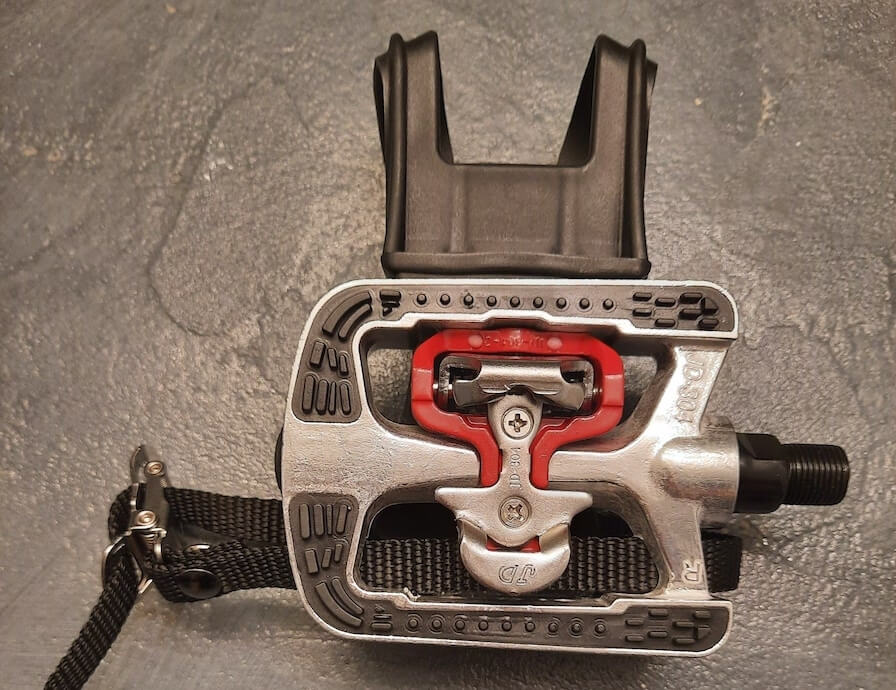
Clipless pedals easily allow cleats to click into the pedal to provide a more robust workout. The most common clipless pedal options include SPD, Delta, and dual-sided. SPD pedals accommodate only an SPD cleat that consists of a two-bolt cleat. The Delta pedal accommodates a three-bolt cleat such as the LOOK Delta. This pedal option is wider than a standard SPD pedal. A dual-sided pedal usually includes a clipless version on one side and a clipped version on the other. Most fitness facilities offer a dual-sided pedal consisting of an SPD and toe variation.
SPD vs. Look Delta Comparison
The SPD pedal is one of the most popular, if not the most popular, pedal types out there. It is found in most fitness studios and comes standard on almost all commercial-grade indoor cycling options. This two-bolt cleat created by Shimano secures to the bottom on the compatible shoe at two points. However, a limited selection of peak performance road bike shoes accommodates the SPD cleat.
A LOOK Delta pedal includes three points where the cleat connects with the pedal. It has a wider base than the SPD and offers slightly more stability. Elite outdoor cyclists more commonly use this pedal because it is provided on a broader range of high-end shoes.
Many people wonder if their power transfer will be greater using an SPD or LOOK delta cleat; however, many more factors influence this decision. Instead of focusing on the cleat, the sole type should be considered. Shoes with a more rigid sole will provide the opportunity for a more significant power transfer. Keep in mind that if a rider has a misalignment in joints such as their ankles or feet, it will be much more pronounced in a stiffer soled cycling cleat.
SPD vs. SPD SL Comparison
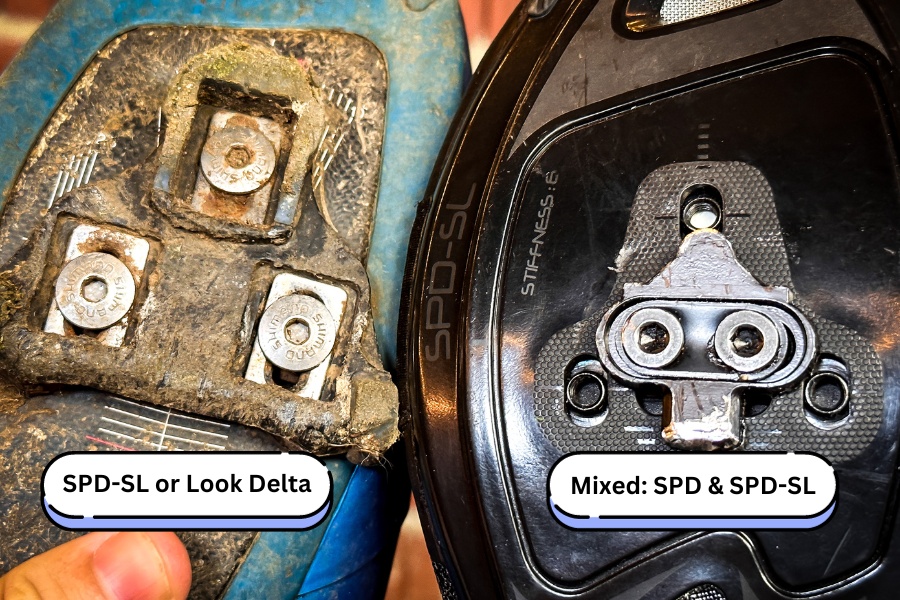
The only thing similar about the SPD and SPD SL is that they have SPD in their name and are created by Shimano. As we have discussed previously, the SPD pedal consists of a cleat attached to the cycling shoe with the help of two bolts. The SPD SL looks very similar to the LOOK Delta and is attached to the shoe using three bolts. This type of cleat is larger than the SPD, allowing for a little better stabilization offered by the wider base.
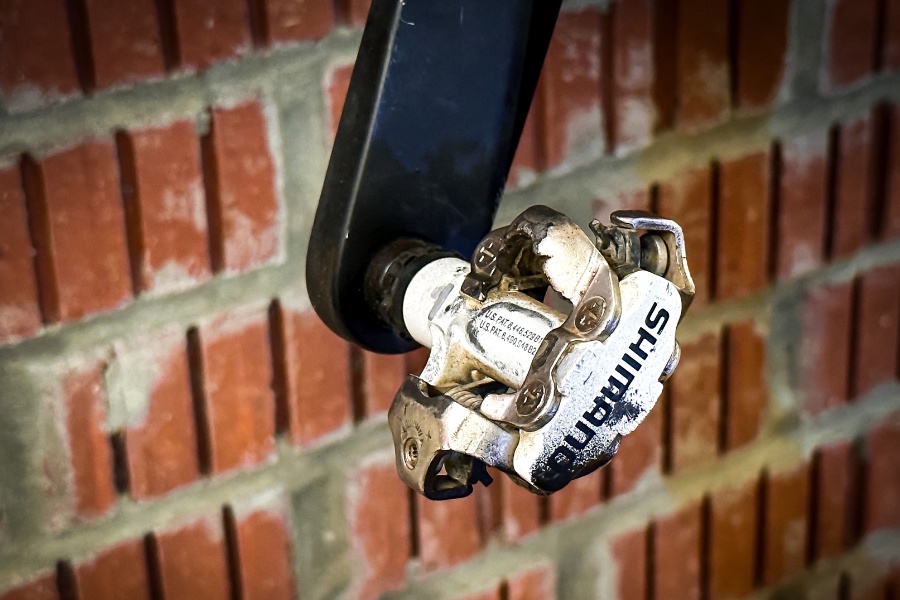
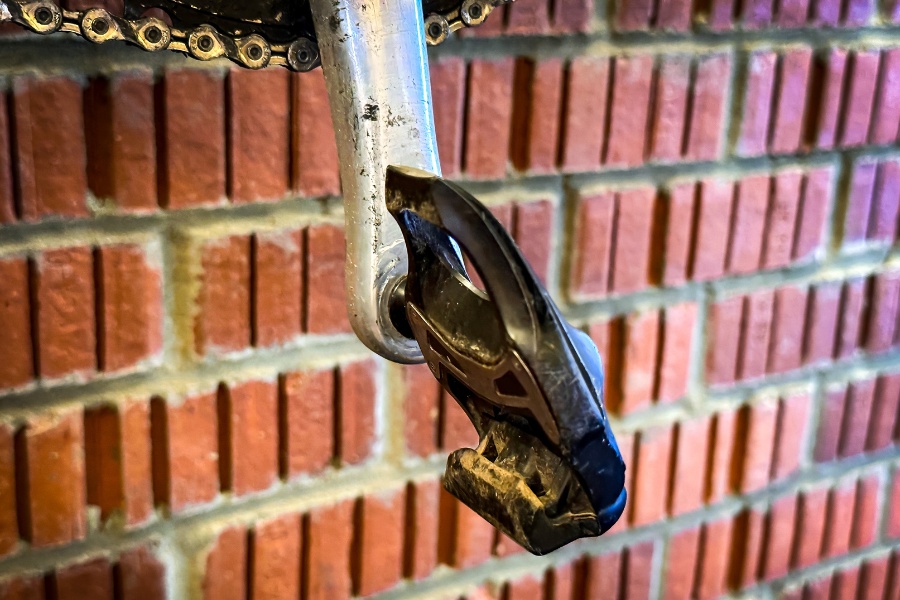
There are many benefits associated with clipless pedals and cleats. First, these cleats allow all 360 degrees of the pedal stroke to be utilized since riders can push and pull without worrying that their shoes will slip. Pedaling is, therefore, more productive with this type. Next, since your feet are somewhat in a fixed position, it allows for a better riding form to be maintained. Finally, most cycling shoes last an average of 7,000 miles before needing replacement, which is much longer than the average running shoe of only 300-500 miles.
Clipless pedal options are best for anyone excited about getting the most out of their workout every time they click in to ride. In addition, beginners to elite cyclists will benefit from the clipless cleat and pedal options.
Clipped (Toe & Flats)
Clipped pedals use your regular workout shoe and do not require specialty cycling shoes. Clipped pedals include toe cages or flats. Toe cages are where your sneaker is secured in the toe cage with a fabric strap and secured with a bracket. Flat pedals are just that, flat on top. Very common on non-specialty bikes you would find at a sporting equipment retailer.
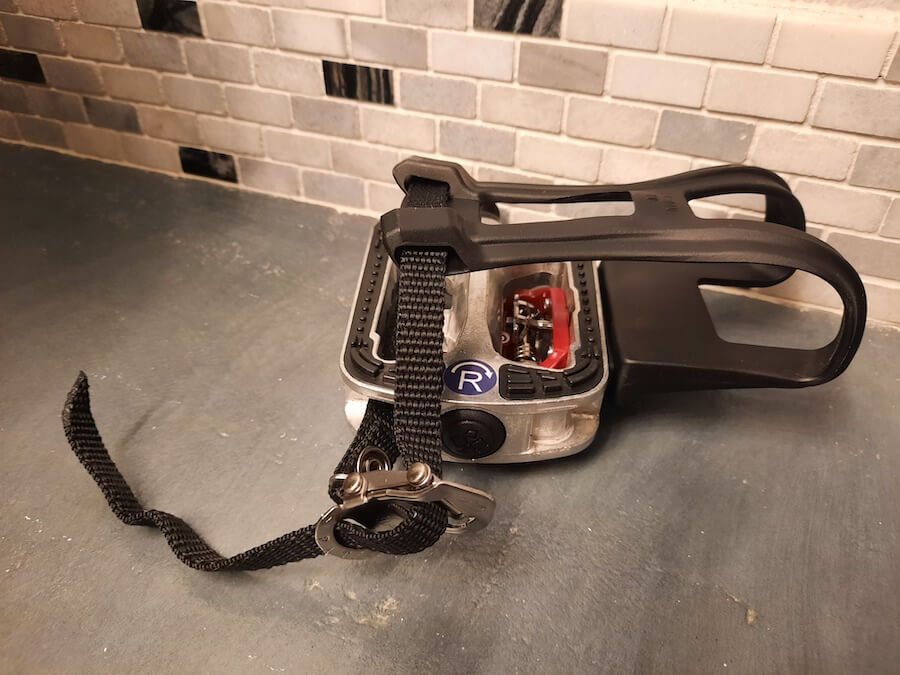
One benefit of using a clipped pedal is that you save on purchasing a new pair of cycling shoes. However, the drawbacks outweigh the benefits of this pedal type. One of the components that I like least about when I have to use a toe cage during class (usually only if I’m taking a class out of town or accidentally forgot my shoes) is where the pedal hits on the ball my foot after every rotation. Another drawback of a toe cage is that if riders do not secure the toe cage ribbon through the bottom bracket, the toe cage will loosen as the rider begins to pull against it, especially in a standing climb or run. Finally, toe cages and flats allow the foot to move around a lot, causing a potential dip in riding form and increasing the chance for injury, especially knee issues.
Flat or toe cage pedal options would be best for those riders that are brand new to indoor cycling and want to see if they like it.
Clipless vs. Clipped: Which is Better and Why
The decision to purchase cycling shoes or use your regular gym shoes for riding can be confusing. Although cycling shoes are an additional expense, they are worth the investment.
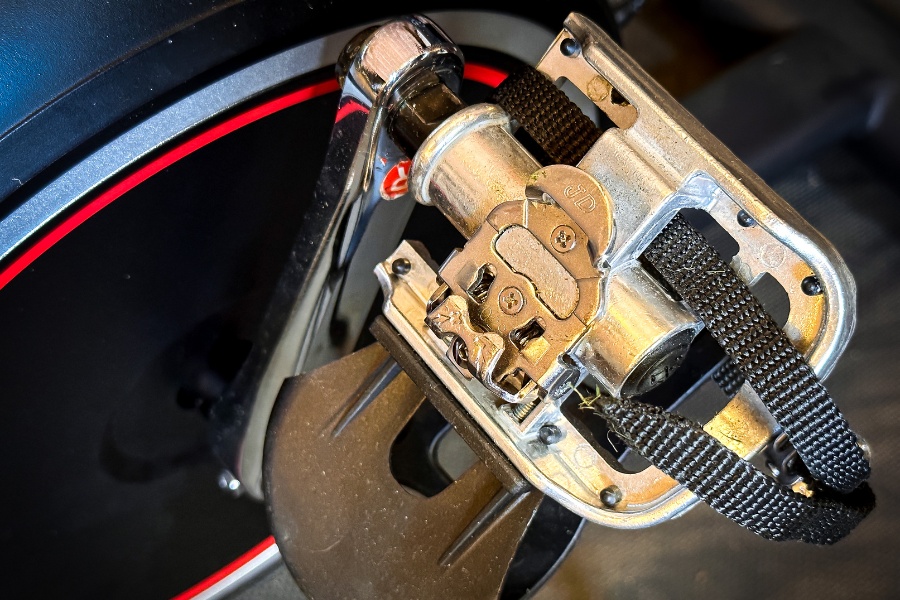
Let’s talk about clipping in your regular workout shoes into toe cages. Can you get a great workout riding in gym shoes? Sure, but you are sacrificing power, knee security, and comfort in the process.
Clipless shoes allow you to be more powerful with every pedal stroke than a traditional shoe. In addition, the more rigid sole of cycling shoes, especially those created with indoor cycling in mind, provide comfort as you no longer feel the pedal on each pedal stroke.
Types of Cycling Shoes and How to Choose the Right One
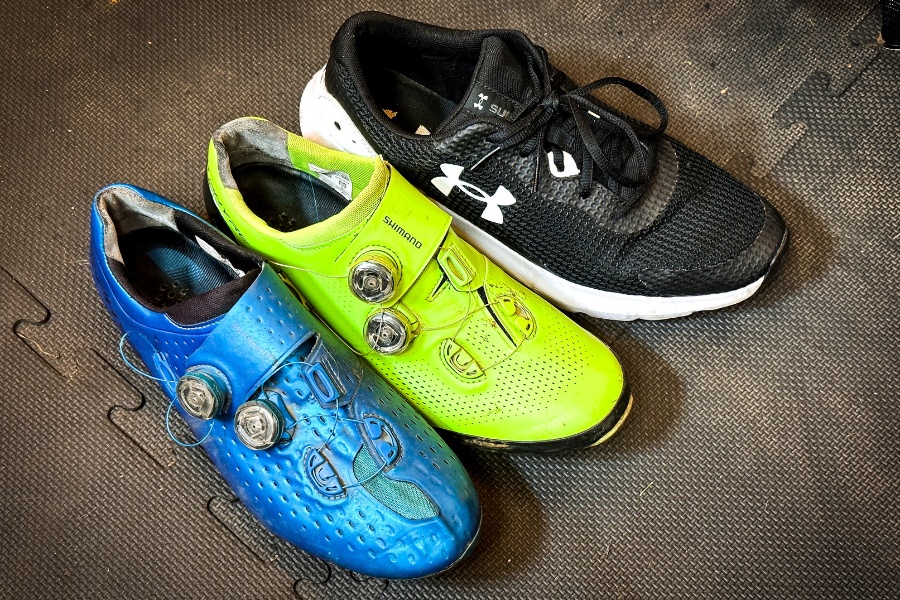
Shoes with SPD Cleats
An SPD clip is the most common in the industry. These Shimano-created pedals are found on most dual pedals. These pedals are ideal for mountain, road, trail riders, general cycling, commuting, and indoor cycling. They consist of a two-bolt system that attaches the SPD cleat under the ball of the foot of the shoe.
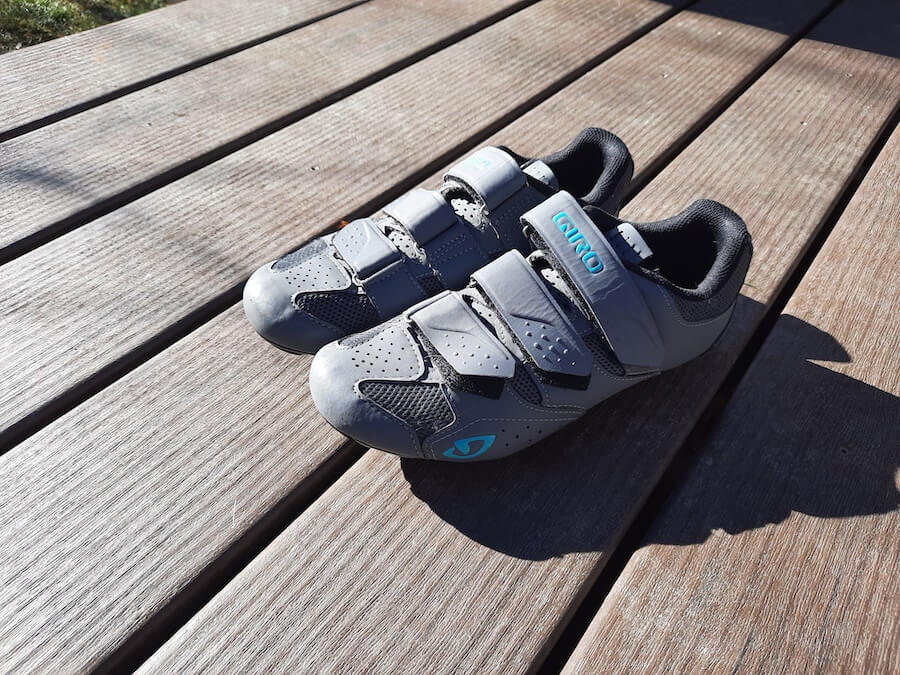
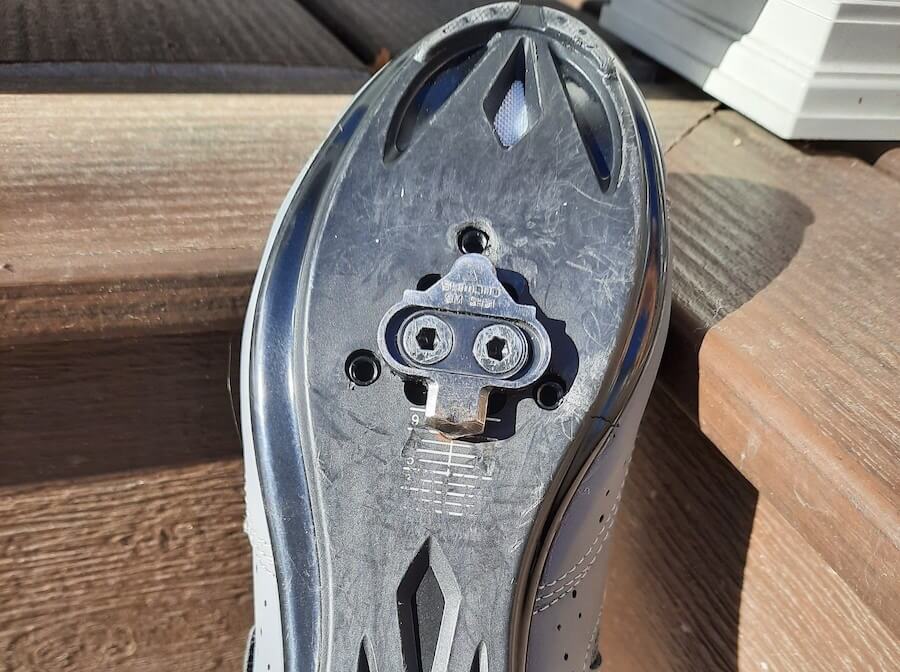
In my 20 years of being a certified Spin Instructor, I have always used this type of clip and love them.
Shoes with LOOK Delta & Keo Cleats
The LOOK Delta and Keo are cleats that include three bolts that clip into the pedal. The Look Delta-style of the shoe is used by avid outdoor road cyclists and is compatible with the Peloton. Likewise, the Keo was designed with outdoor riding in mind.
Read Also:
Indoor vs. Outdoor Cycling Shoes
Shoes with SPD-SL Cleats
The SPD-SL also uses a three-bolt system to fasten the cleat to the shoe’s bottom. This style is compatible with very high-end cycling shoes that also accommodate LOOK Delta and Keo. It is important to note that although these show options look very similar to the LOOK, they fit best with an SPD-SL pedal. Advanced cyclists are the target audience for this shoe option.
Shoes with Speedplay
Speedplay pedals are not as common as the other shoe options discussed above. This shoe includes a four-bolt system and is also more expensive than the different styles discussed. However, many avid outdoor riders love this pedal system and shoe combo for its uniqueness and lightweight cleat option.
See my shoes on Amazon!

How to Clip-in
It can take a little practice to click in and out of your pedals. Begin by sitting on your bike. Next, place your feet on your pedals with your dominant leg at the top of the pedal stroke. It is easier to click in your dominant leg first. Then, keep your heel up as you begin to align your cleat with the clip on the pedal. Finally, drive your heel down to hear the click once your cleat is aligned.
It is important to note that you do not get out of the pedals the way you click in. It is easiest to bring your pedals parallel to the ground, and with your dominant leg, quickly move your heel away from the bike, and it should unclick.
What Does “Float” Mean on Cleats, and Why Is It Important?
When referencing cleats, the word “float” means the amount of side-to-side movement your foot still has while secured in the pedal. This is a crucial component for knee health. “Float” allows the knee to be in the proper riding position throughout the pedal stroke. If “float” didn’t exist, the pedal stroke would be taxing and harmful to the knees as they would be unable to move to a natural position throughout the stroke.
FAQ
Is Peloton SPD or Delta?
Do LOOk Delta cleats fit SPD?
Can You Switch Delta for SPD Cleats?
Conclusion
Cycling shoes allow you to get the most out of every workout by not only increasing your productivity but helping to keep your riding form in check and your knees healthy. If you are serious about riding, then a cycling cleat is a must. Happy riding!
Quick Answers
can you change pedals on a spin bike
Yes, you can easily change the pedals on your cycling bike. Just because your bike came with one specific type doesn't mean you are stuck with it. You can swap the pedals out to accommodate whichever riding shoes or cleats you prefer to use.
what is the difference between spd and look delta
SPD cleats use a two-bolt connection created by Shimano and are standard in most fitness studios. LOOK Delta cleats use a three-bolt connection with a wider base that provides slightly more stability. They fit different shoes and pedals, meaning LOOK Delta cleats will not fit into an SPD pedal.
are clipless pedals better than toe cages for spin class
Yes. Clipless pedals allow you to utilize all 360 degrees of your pedal stroke by pushing and pulling without slipping. While toe cages save money on shoes, they sacrifice power, comfort, and knee security. Rigid clipless cycling shoes protect your riding form and can last an average of 7,000 miles.
how to clip in and out of spin bike pedals
To clip in, place your dominant foot at the top of the stroke, keep your heel up to align the cleat with the clip, and drive your heel down until it clicks. To unclip, bring your pedals parallel to the ground and quickly push your heel outward away from the bike.
what does cleat float mean and why does it matter
Float is the amount of side-to-side movement your foot retains while clipped into the pedal. It is essential for knee health because it lets your knees adjust into a natural riding position during the stroke. Without float, pedaling would be taxing and could potentially harm your knees.
