
Here's the Gist
I am the author of this guide, and I wrote it to help you understand the differences between indoor cycles and recumbent bikes. Choosing the right machine ultimately comes down to whether you prioritize intense, road-style performance or gentle, low-impact comfort.
- Indoor cycles use heavy flywheels and forward-leaning seating to closely mimic the feel and power output of real road bikes.
- Recumbent bikes feature backrests, wide seats, and forward pedals, providing crucial lumbar support for people with back pain or mobility limits.
- Pedaling downwards on an indoor cycle generates optimal power, whereas forward pedaling on a recumbent bike sacrifices performance for relaxed ergonomics.
- Most recumbent bikes display real-time metrics like speed and calories burned, while indoor cycles often rely on connected apps for guided classes.
- Both bikes promote weight loss, but indoor cycles burn more calories in the same time frame thanks to heavier flywheels and higher intensity.
- Indoor cycles generally cost more and suit performance-driven goals, while recumbent bikes offer an affordable, low-impact way to exercise comfortably.
Exercising at home has become the new norm. Exercise bikes are a great addition to your home gym as they help you improve your fitness and lose weight. There are many different types of bikes including indoor cycles and recumbent bikes. In this article, we’re going to talk you through their difference and help you find the most suitable bike for you.
Indoor Cycle / Spin® Bike
What Is It?
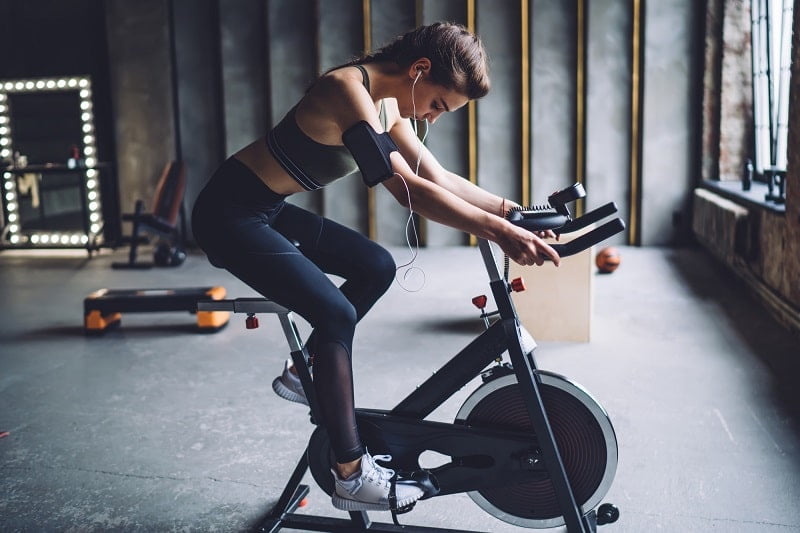
Indoor cycles are best known as Spin® bikes. Spin® style classes are a common sight in gyms across the world. But, indoor cycles aren’t limited to this popular exercise activity. Indoor cycles are also popular amongst road cyclists looking for an indoor alternative. Indoor cycles act and feel like a real road bike. The set-up and pedaling motion are almost identical. Thus a great alternative to riding outdoors.
Indoor cycles have a heavy flywheel instead of wheels. The flywheel and pedals are connected via a chain to mimic a real bike. Resistance can be applied against the flywheel by adjusting a crank or knob. Most indoor cycles generate resistance via magnets, friction, or a combination of both. Increasing the resistance the pads or magnets move closer to the flywheel. The closer to the flywheel, the harder it is to pedal.
Following the increased popularity of exercising at home, many companies have created apps and programs to bring Spin® style classes to your home. There are many reasons why we love this feature. Firstly, it saves you time driving to and from the gym. Secondly, it helps guide you through a class. Thirdly, it’s great for pushing you when you feel like giving up.
Indoor Cycles: Pros & Cons
Recumbent Bike
What Is It?
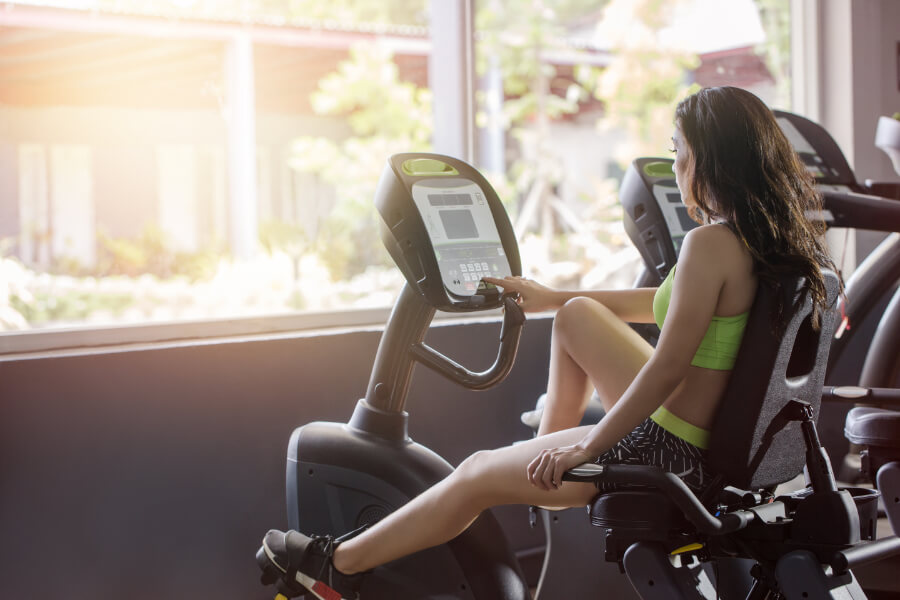
The most noticeable feature of a recumbent bike is its seat positioning. You’ll notice the recumbent bike contains a backrest and the seat is very low. This is to support a comfortable position. You can simply sit back and relax while exercising. It’s a win-win. Recumbent bikes increase lumbar support, thus benefiting people with back pain. Another neat feature of recumbent bikes is their wide seat.
Recumbent bikes contain a light flywheel connected to the pedals via a chain or belt. Resistance can be created using electromagnets, magnets, or fans. Resistance can usually be adjusted by the simple press of a button. Most recumbent bikes use technology to display resistance, calories burned, heart rate, distance, and speed. Many will also have preset programs that guide you through a workout. This feature is extremely useful when you’re aiming to hit a specific goal during a workout. Some recumbent bikes also have built-in resistance bands to turn your cycle into a full-body workout.
Recumbent Bikes: Pros & Cons
Differences
Seat Position
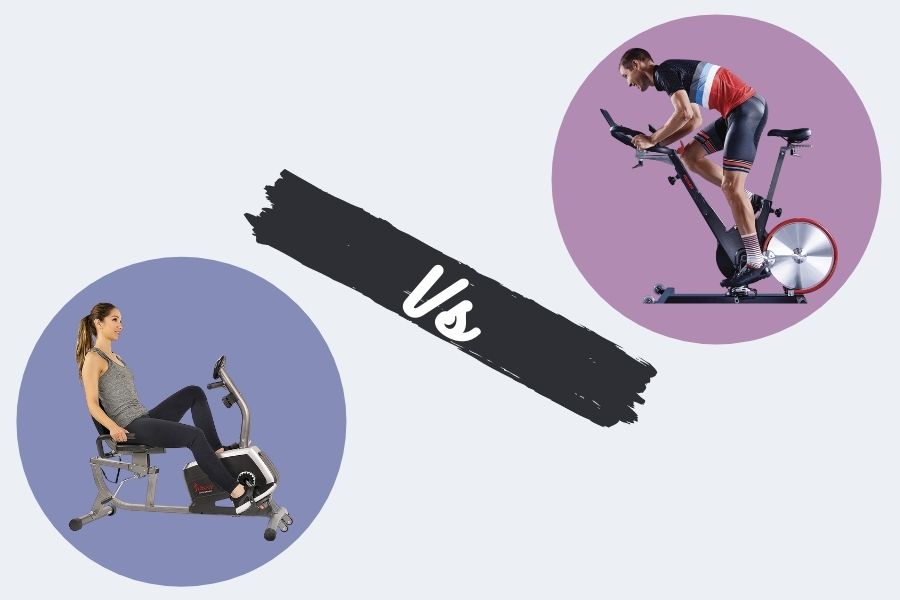
The biggest difference between an indoor cycle and a recumbent bike is the seat position. On an indoor cycle, the seat is above the handlebars. Therefore, your torso will be in a leaning position when cycling. The pedals are underneath the seat, thus you can drive through the pedals with optimal power. This is the exact position you’ll be on a road bike too.
A recumbent bike supports a completely different position. The seat contains a backrest and the pedals are in front of you. This position is a lower impact and creates more lumbar support. However, it’s not a prime position for performance. Pedaling with your legs in front of you doesn’t create as much power as when your legs are pushing down.
If performance is your goal, an indoor cycle is more appropriate. If you’re looking for a comfortable way to add exercise to your day, recumbent bikes are more suited.
Resistance
Both the indoor cycle and recumbent bike use a flywheel. But, indoor cycles use a heavy flywheel, whereas recumbent bikes use a light flywheel. Heavy flywheels make you feel like you’re riding a road bike. When you stop pedaling they will continue to rotate based on power output. However, light flywheels create an abnormal feeling. Generally speaking, the lighter the flywheel the easier it is to move. Therefore, lighter flywheels are more suitable for beginners, older people, and those with exercise limitations.
Technology
Bikes have evolved a lot over the years. One thing that has prompted the evolution is continuous advancements in technology. Many indoor cycle brands have created apps and programs that bring Spin® style classes to your home. This is a great feature that brings a community-style environment to your living room. Yet, many indoor cycles lack real-time analysis of data such as resistance, calories burned, heart rate, distance, and speed. Most recumbent bikes do support this feature. Real-time data analysis is a great way to track your workouts and progress over time.
Price
Price varies between low- and high-end models for both the indoor cycle and recumbent bike. However, on the whole, indoor cycles are more expensive than recumbent bikes.
Seat
Another key difference between an indoor cycle and a recumbent bike is the seat size. The seat on an indoor cycle is firm and narrow. It is designed to support optimal performance while limiting chafing. Conversely, recumbent bikes have a wide, comfortable seat. They are much more comfortable but aren’t optimal for performance. If comfort trump’s performance, then recumbent bikes are more suitable and vice versa.
Recumbent Bike vs Indoor Cycle Calories: Which Is the Better for Weight Loss?
Both the indoor cycle and recumbent bike can support your weight loss journey. Weight loss occurs when your body expends more than it consumes. Increasing your activity will contribute to weight loss when you burn more than you eat. Both bikes allow you to increase your heart rate and work your muscles, thus leading to increased calorie burn. But, calorie burn also depends on intensity.
Since indoor cycles have a heavier flywheel, it is easier to burn more calories on an indoor cycle than on a recumbent bike in the same space of time. So, overall both will help you burn more calories. But, if I had to choose one it would be the indoor cycle due to its efficiency.
Indoor Cycle vs Upright & Recumbent: What Is the Difference?
Stationary bikes can be further divided into indoor cycles, upright, and recumbent bikes. While they all require a pedaling motion, their appearance and feel differ dramatically. Take a look at the table below to see the key differences between the three.
| Difference | Indoor Cycles | Upright Bikes | Recumbent Bikes |
|---|---|---|---|
| Resistance | Heavy flywheel. | Light flywheel. | Light flywheel. |
| Seated Position | Seat is above the handlebars. Rider sits with a forward lean. Pedals are beneath the seat. | Seat is below the handlebars. Rider sits in an upright position. Pedals are beneath the seat. | Seat is below the handlebars. Rider sits with a backward lean. Pedals are in front of the seat. |
| Gadgets | Some models are compatible with apps, but others lack real-time data. | Typically display real-time data. | Typically display real-time data. |
| Seat | Firm and narrow. | Wide and comfortable. | Wide and comfortable. |
| Price | Generally speaking, they are more expensive. | Generally speaking, they are cheaper. | Generally speaking, they are cheaper. |
Verdict: Which is the best for me?
The best bike for you depends on what you want from the bike. Indoor cycles are perfect indoor alternatives to a road bike.
In short, if performance is your goal, an indoor cycle is more appropriate. If you’re looking for a comfortable way to add exercise to your day, recumbent bikes are more suited.
Quick Answers
Which is better for weight loss, an indoor cycle or a recumbent bike?
Both bikes support weight loss by increasing your calorie burn. However, because indoor cycles have a heavier flywheel, it is easier to burn more calories in the same amount of time. While both will help you reach your goals, I would choose the indoor cycle due to its efficiency.
Is a recumbent bike good for lower back pain?
Yes. A recumbent bike features a low, wide seat with a backrest that increases lumbar support. Its laid-back, low-impact position allows you to exercise comfortably with your legs out in front of you, making it a great option for elderly people and anyone dealing with lower back pain.
What is the difference between an indoor cycle and a recumbent bike flywheel?
Indoor cycles use a heavy flywheel that mimics the feel of a road bike and continues rotating based on your power output. Recumbent bikes use a light flywheel connected by a chain or belt, which is easier to pedal and ideal for beginners or those with exercise limitations.
Do indoor cycles track workout data like distance and calories?
Most indoor cycles do not display real-time data such as calories burned, heart rate, distance, and speed, though some offer apps to guide you through classes. Most recumbent bikes, on the other hand, include built-in technology to track and display these workout metrics directly on the console.
How do I choose between an indoor cycle and a recumbent bike?
Base your choice on your personal goals. If your aim is performance, HIIT, or Spin-style classes that feel like riding a road bike, an indoor cycle is best. If you want a comfortable, low-impact way to improve general fitness while relaxing at home, choose a recumbent bike.
