
Here's the Gist
I wrote this guide to break down what Q-Factor is on indoor cycling bikes and why getting it right matters for your body. Understanding this crank measurement will help you avoid knee pain, match your natural stance width, and pick the most comfortable bike.
- Coined in 1990 by Greg Petersen, Q-Factor measures the distance in millimeters between the outside pedal holes of both crank arms.
- Road bikes average 150mm and mountain bikes 170mm, while popular indoor cycles usually feature Q-Factors between 155mm and 175mm.
- An incorrect Q-Factor triggers knee pain; ideally, your knees should align over your ankles when pedals are parallel to the floor.
- A narrower Q-Factor feels closer to an outdoor bike and provides a more comfortable ride for most riders' natural anatomy.
- Before swapping saddles or getting longer spindles, you can easily adjust your fit post-purchase simply by changing your pedals or cleats.
- Always consider stance width alongside Q-Factor to ensure the distance between pedal centers matches your unique hip and foot alignment.
Have you ever heard someone mention the Q-Factor of a specific bike and wondered what the heck it is? This term plays a more prominent role when discussing mountain and road bikes, but still important to understand whether your workout remains on indoor cycling bikes. Let’s break down what Q-Factor is and why it matters to you.
What is Q-Factor?
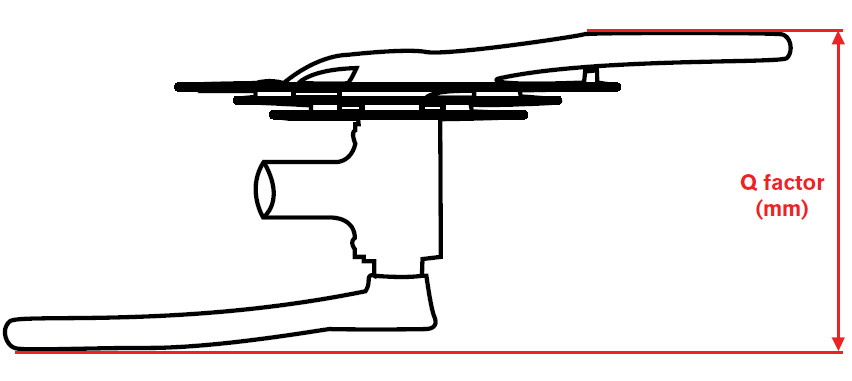
Greg Petersen, the founder of Rivendell Bicycle Works, first coined the term Q-Factor in 1990, which relates to the distance from the outside of one crank’s pedal hole to the outside of the other crank’s pedal hole. He describes Q-Factor in greater detail in his book Just Ride, where he shared, “Crank makers talk about Q-Factor, but few know that the Q stands for “quack.” Ducks waddle with their feet far apart relative to their leg length, and thus have high Q-Factors.“Q-Factor is measured in millimeters. For example, road bikes have an average Q-Factor of 150mm compared to 170mm for mountain bikes.
Why Does Q-Factor Matter?
If you like to ride multiple times per week on your indoor cycling bike, then the Q-Factor should be something for you to consider, as you will notice if your Q-Factor is incorrect. Q-Factor issues manifest themselves as knee pain during and post-ride, in addition to the bike just feeling uncomfortable. A smaller Q-Factor on your indoor cycling bike will also offer a similar riding experience to an outdoor bike, but it is essential to remember not to go too low.
Finding the Correct Q-Factor for You
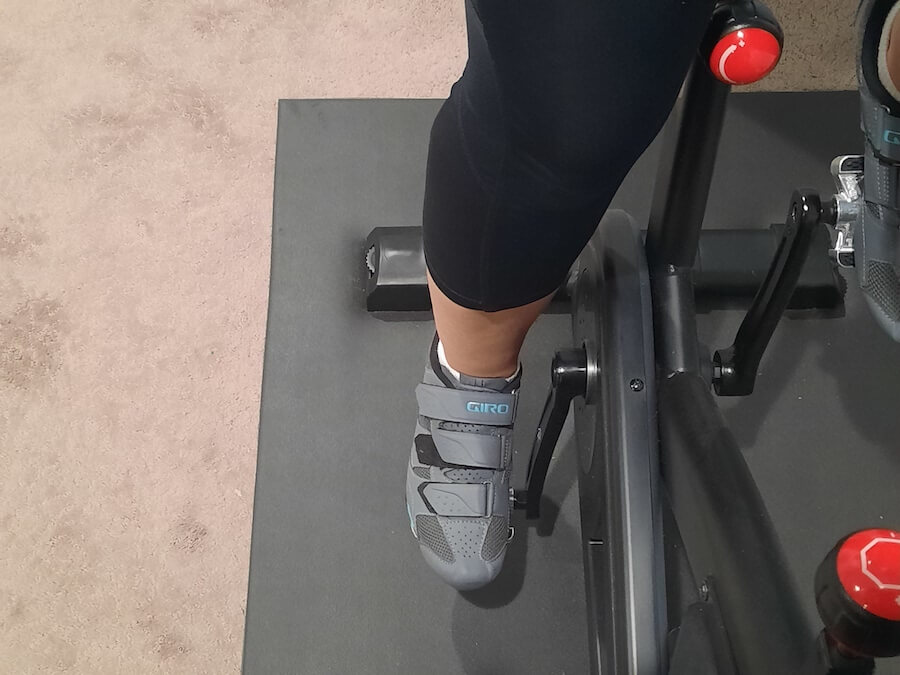
Ideally, your knees should align with your ankles when the pedals are parallel to the floor. However, if your knees are too wide or too narrow, this potentially increases the possibility of knee pain. One of the best ways to determine which Q-Factor is best for you is to get on the different bikes you are considering and see which one feels the most comfortable while checking your knee and ankle alignment before purchasing. A few fixes can be made post-purchase to remedy an incorrect Q-Factor, but we recommend doing your research first to save yourself a headache later.
As you can see from the graph below, a wide range of Q-Factors is offered for indoor cycling bikes. However, many of the most popular indoor cycling bikes have a q-factor range between 155 mm – 175 mm.
| Indoor Cycle Model | Q-Factor |
|---|---|
| Spinner S5 | 147 mm |
| Life Fitness IC7 | 155 mm |
| MYX II | 165 mm |
| Peloton | 170 mm |
| Bowflex C6 & Schwinn IC4 | 190 mm |
| Keiser M3i | 197 mm |
| Echelon EX3 | 202 mm |
How to Adjust Your Q-Factor
For most indoor cyclists, the Q-Factor on a commercial-grade bike will be fine. However, if you need to make some adjustments, we have a few suggestions. For the most part, the bulk of riders will be able to find the right Q-Factor by simply either trading out their pedals or cleats to find their perfect fit. We recommend that you go down the road of pedals or cleats first before moving on to changing things like changing your saddle or getting longer pedal spindles.
Is Q-Factor the Only Thing to Consider?
While Q-Factor matters, it is also essential to discuss “stance width.” Stance width on a bike is the distance between the middle of one pedal to the center of the other. More importantly, your unique stance width is how wide your hips and feet are for proper alignment. Making sure that the bike also fits your stance width is key.
FAQ
- Is a Narrow Q-Factor Better?
- It comes down to your anatomy and what best fits your frame, but a narrower Q-Factor will provide a more comfortable ride for most people. Just remember to select a bike that allows proper knee and ankle alignment.
- It comes down to your anatomy and what best fits your frame, but a narrower Q-Factor will provide a more comfortable ride for most people. Just remember to select a bike that allows proper knee and ankle alignment.
- What is Bike Crank Q-Factor?
- The Bike Crank Q-Factor, also referred to as tread, is the distance between the pedals’ attachment point on each crank arm.
- The Bike Crank Q-Factor, also referred to as tread, is the distance between the pedals’ attachment point on each crank arm.
- How Do I Lower My Q-Factor?
- To lower your Q-Factor, the most accessible place to start is adjusting your cleats and pedals before looking into changing other bike components.
The Bottom Line

The Q-Factor is a vital component to consider when making your final decision on which bike to choose. Therefore, try to ride your potential bike ahead of time to see how it feels and check your alignment. Selecting a bike with the right Q-Factor for you helps diminish the chance of injury and increases your enjoyment each time you click in to ride.
Quick Answers
What is Q-factor on an exercise bike?
Q-Factor is the distance, measured in millimeters, from the outside of one crank's pedal hole to the outside of the other. The term was coined in 1990 by Greg Petersen, where Q stands for quack. Many of the most popular indoor cycling bikes fall in the 155 mm to 175 mm range.
What happens if my bike Q-factor is wrong?
If your Q-Factor is incorrect, the issues primarily manifest as knee pain during and post-ride, along with the bike just feeling uncomfortable. This often happens because your knees are forced too wide or too narrow, which ruins proper alignment and increases your chances of injury.
How do I find the correct Q-factor for my body?
Ideally, your knees should align with your ankles when your pedals are parallel to the floor. We recommend hopping on different bikes you are considering before purchasing so you can check your knee and ankle alignment and see what feels the most comfortable for your anatomy.
How can I adjust the Q-factor on an indoor bike?
For most riders, the most accessible fix is simply trading out or adjusting your pedals or cleats to find your fit. We recommend going down the pedal and cleat route first before moving on to other component changes, like swapping your saddle or getting longer pedal spindles.
What is the difference between Q-factor and stance width?
Q-Factor is the distance between the pedal attachment points on the crank arms. In contrast, stance width is the distance between the middle of one pedal to the center of the other, representing how wide your hips and feet need to be for proper alignment.
